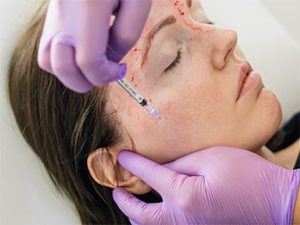
Also known as the “vampire facial,” platelet-rich plasma (PRP) has received so much attention that it may seem as if we’ve finally found the fountain of youth. Despite the hoopla, there’s little evidence to show that it works — or doesn’t work.
What exactly is PRP?
We all have platelets in our blood. PRP is 3-step procedure that involves having your blood:
Drawn from your arm
Placed into a machine that separates the platelets from the rest of your blood
Re-injected into you (only the part of your blood that contains a high concentration of platelets).
Orthopedic surgeons use PRP to help athletes recover more quickly after an injury.
In dermatology, PRP is being tested as a possible treatment for hair loss. PRP may also speed up wound healing. A few dermatologists are using PRP to give patients younger-looking skin.
If you’re thinking about trying PRP, see a board-certified dermatologist. These doctors perform more cosmetic procedures than any other type of medical doctor. They have the in-depth training required to evaluate your skin and tell you what proven treatments can be most effective for you.
While PRP may sound like something straight out of a science-fiction novel, some patients are finding that PRP can:
Reduce wrinkles
Plump up sagging skin
Get rid of deep creases
Improve one’s complexion
Diminish acne scars